
7 min read
October 30, 2025
Why AI Search Is Rewriting Pharma Brands
AI summaries are rewriting the rules of digital, amplifying pharma’s challenge from compliance to commercial invisibility.
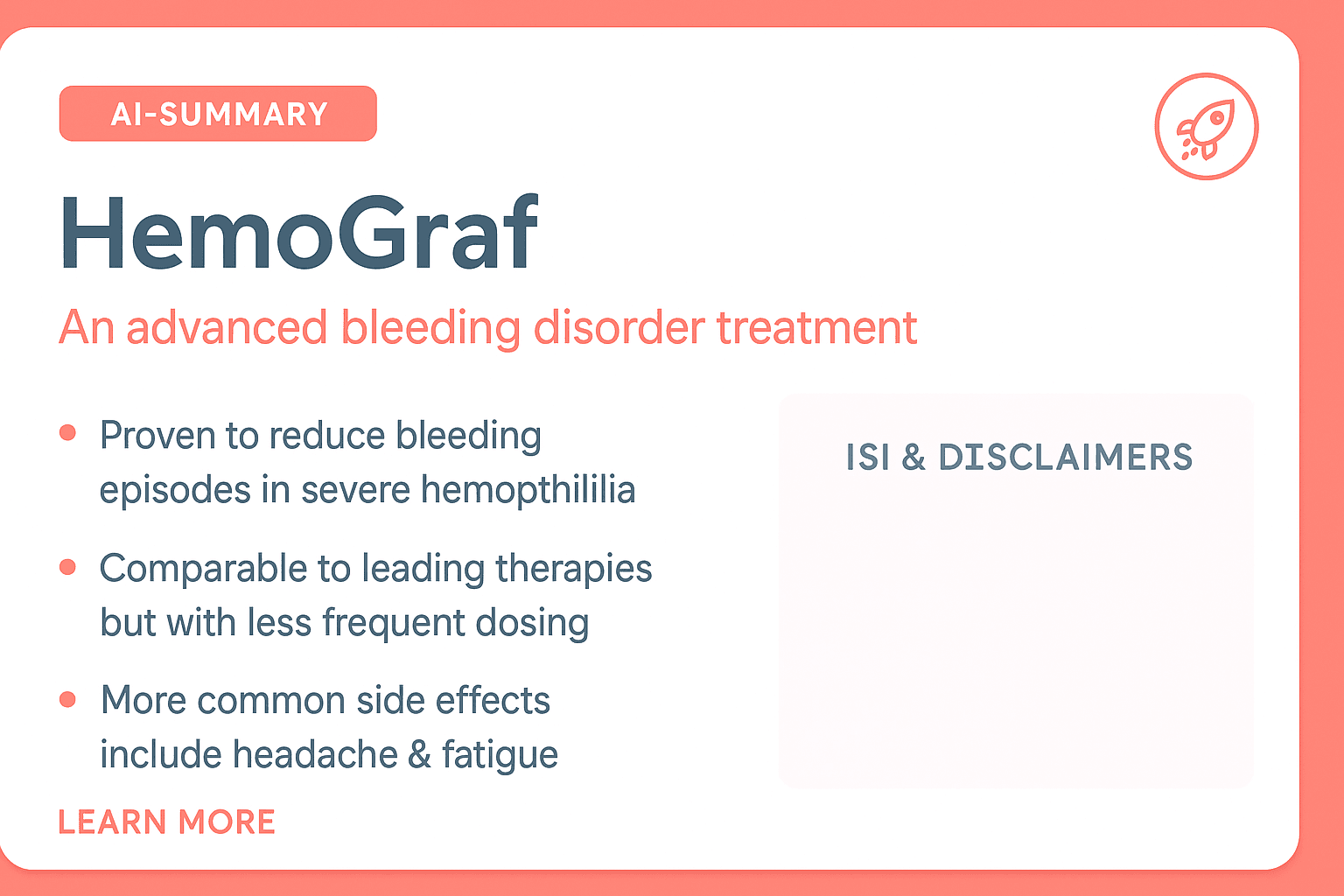
The way HCPs and patients discover your drug has fundamentally changed in the past 18 months, and most biotech commercial teams haven't noticed yet. Organic clicks are down nearly 30%, and it’s a visibility problem. AI summaries now sit where Biotech brand top organic result used to be, sometimes even above SEM results. Instead of scrolling, users get their answers immediately from a chatbot, an AI overview, or a voice query.
For biotech and pharma marketers, this changes everything. The “front door” to the brand has moved from MLR-approved and compliant content to an AI-generated summary written by a model that’s never read the ISI. The commercial risk is obvious: AI might capture the drug's MOA but miss unique differentiation and patient characteristics. It might summarize trial results and efficacy but drop side effects and safety context. Or worse: it might bring up the competitor instead.
Traditional SEO won’t fix this. Without Answer Engine Optimization (AEO), which is making the content machine-readable and credible enough for AI to cite, your brand narrative gets replaced by someone else’s.
The Real Threat Isn’t Compliance. It’s Commercial Irrelevance.
Medical, regulatory and legal teams will worry about AI hallucinations, spotty fair balance, or off-label implications, and they should. But for the commercial organization, the biggest concern is invisibility. When AI engines answer "best treatment for advanced CRC," the first narrative that appears captures the market. If that answer doesn't include your therapy, you've already lost HCP mindshare, prescriber consideration, and possibly payer positioning before your next campaign even starts.
This shift compounds during the product or indication launch:
Pre-Launch: Fewer touchpoints to shape market with disease ed before before the PDUFA date or approval.
Launch: Harder to surface MOA or clinical value proposition in crowded digital feeds.
Post-Launch: Less organic reach means higher paid media spend to achieve the same awareness.
In other words, the brand that can't be found is the medicine prescribed less.
Where Pharma SEO Falls Apart
Most brand teams still optimize for Google's decade-old rules: keywords, backlinks, meta tags. AI overviews don't care about that. They care about structure, recency, and credibility.
Authority gaps. Content without E-E-A-T (Experience, Expertise, Authoritativeness, Trustworthiness) gets skipped. If your Phase 3 trial data is buried three clicks deep, AI ignores it.
Siloed structures. Patient resources and HCP portals live on separate domains, or PDFs, or CMS instances, breaking the data trail AI relies on.
Stale content. AI engines favor freshness. If your pages don't reflect the latest updated guidelines, or real-world evidence, they vanish from AI summaries for "new treatments in NSCLC."
Every outdated efficacy claim, missing schema tag, or unlinked publication quietly hands ground to competitors who've already optimized for AI parsing.
The Strategic Play: SEO Meets AEO
Winning in this new environment isn't about gaming algorithms. It's about shaping how AI understands your clinical story. AEO bridges commercial strategy and digital infrastructure. Start by using natural-language queries your target HCPs actually ask: "How does this checkpoint inhibitor compare to Keytruda in first-line NSCLC?" Then add structured data: schema markup, FAQ blocks, and medical entity tags so AI can read your site like a clinical data feed. Refresh continuously, aligning content updates with regulatory milestones, label expansions, and medical congress presentations. Most importantly, audit machine visibility regularly to check whether your asset is being cited or skipped in AI overviews for key therapeutic queries.
This isn't a side project for your digital team or media agency. It's the digital equivalent of Sales team readiness, ensuring your asset shows up accurately and persuasively at the exact moment HCPs and patients are asking the questions that drive prescribing decisions.
What Commercial Leaders Should Do Now
If you’re launching or making a major site update in the next 6 months, run an AEO audit first. Use tools like SEMrush or BrightEdge to see whether your asset appears in AI responses for high-intent therapeutic queries, then benchmark against competitive therapies. Redefine your digital KPIs because unique visitors alone are meaningless now. Track AI citations, featured snippet placements, and HCP engagement after click-through. Rebuild your content architecture by implementing schema across patient resources, HCP portals, and medical information sites, and unify your content taxonomy so AI can read clinical context across all touchpoints. Treat each new clinical data readout, ASH or ASCO presentation, or indication expansion as a trigger for content updates, refreshing like a medical news desk rather than a quarterly content calendar. Finally, integrate with omnichannel operations; your AI-ready content should feed your CRM, med affairs platforms, and sales enablement tools for consistent messaging across all channels.
The Bottom Line
AI summaries aren't killing SEO. They're redefining who controls the clinical narrative. For biotech and pharma commercial teams, that control translates into market share. The first narrative AI tells about your drug is the first impression HCPs and patients get. If you're not optimizing for it, someone else, a competitor with better-structured data, a patient advocacy site, or worse, a non-credible source, already is. Whether we're ready or not, AEO is now a commercial imperative.
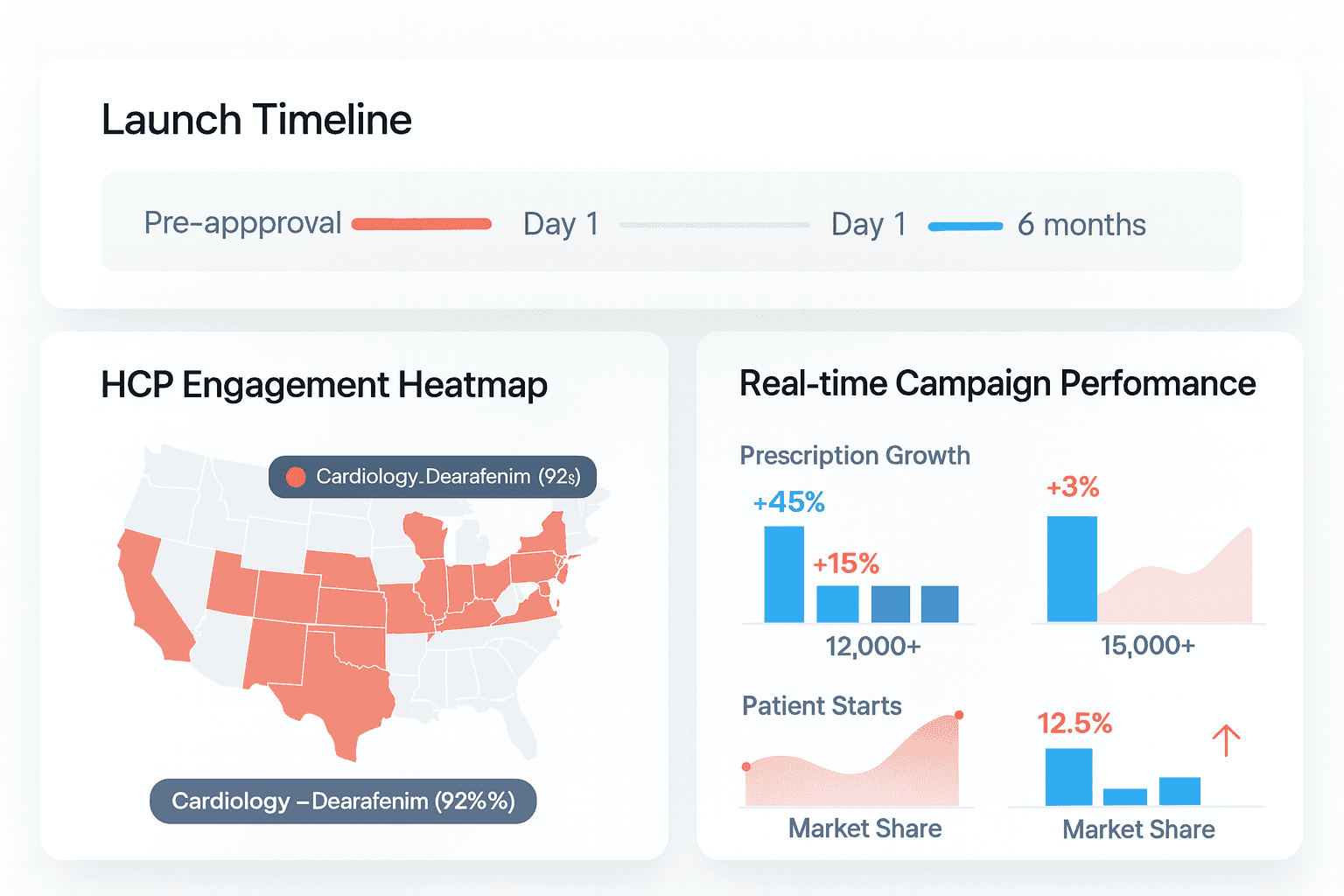
Launch Day 1. Build to Scale.
AI‑powered digital launch readiness: we compress months of work so your campaigns and infrastructure are live at approval and ready to grow with your portfolio.
10x Growth
Product adoption accelerated by digital innovation
15+ Years
Building digital engines for biotech and pharma
20+ Brands
Launches across oncology, rare disease & specialty